Custom Poly Bags for Food Processing: What to Look For
If you process or package food for a living, you already know that the wrong poly bag doesn’t just look bad on the shelf — it can trigger a recall, fail an audit, or let moisture and oxygen ruin a product before it reaches the customer. Custom poly bags for food processing have to satisfy two masters: protect and sell the product, and meet FDA food-contact standards that leave no room for guesswork. Whether you’re a baked goods producer in Jackson, TN, a meat processor in Tupelo, MS, or a manufacturer shipping nationwide, here’s what to check before your next order.
Start With FDA Food-Contact Compliance
Any poly bag that touches food directly must comply with FDA regulation 21 CFR 177.1520, which governs olefin polymers used in food-contact applications. Food-grade bags must be manufactured from virgin resins — material never previously processed or reprocessed — with no recycled content, fillers, or additives that could compromise purity. The manufacturing facility itself also has to meet FDA requirements, so ask any new supplier for documentation, not just a verbal assurance.
Choose the Right Material for the Job
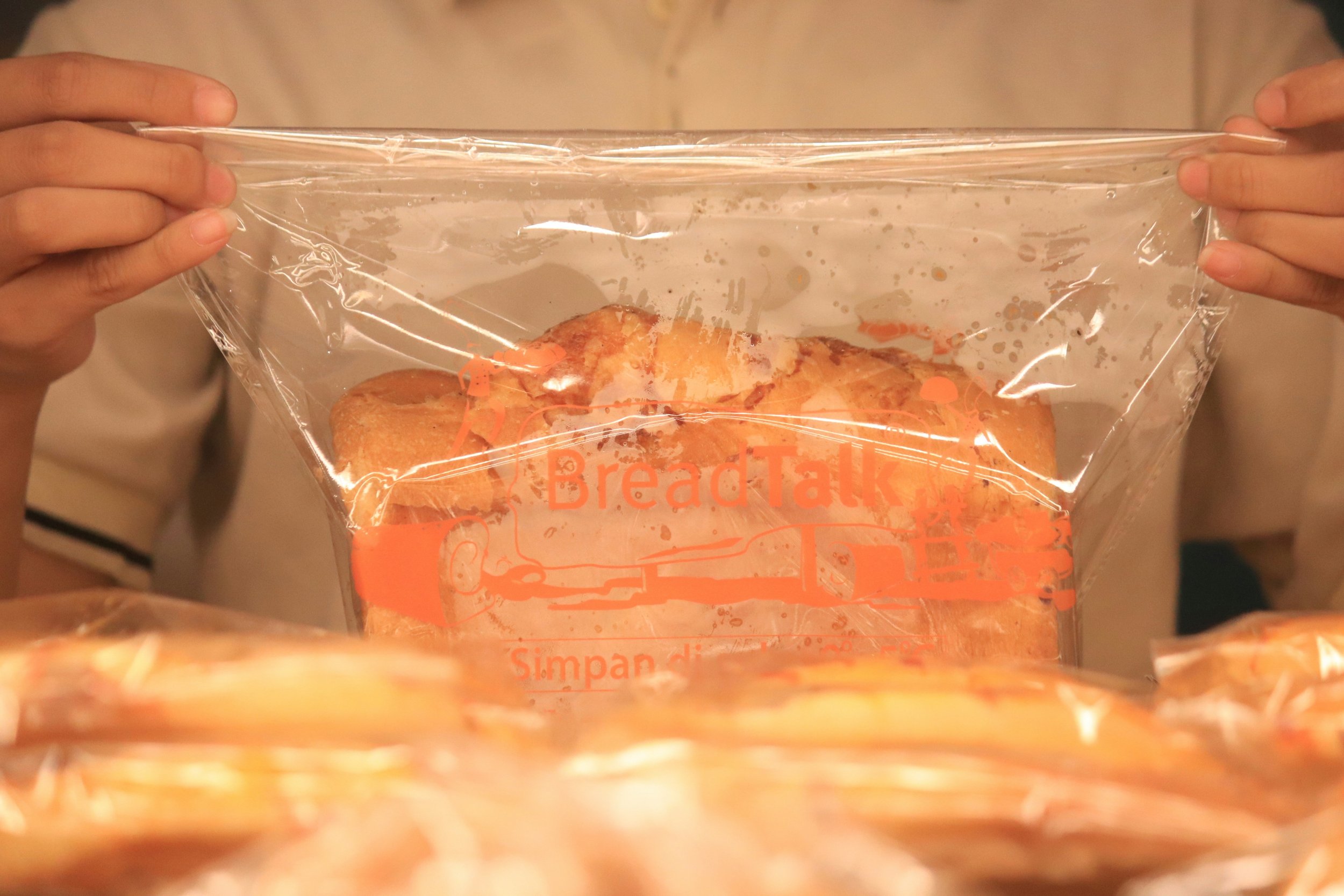
Most food-grade poly bags are made from low-density polyethylene (LDPE), prized for being chemically inert, moisture-resistant, and easy to heat-seal with standard equipment. Polypropylene (PP) is another common option — non-toxic, odorless, and chemically stable, often preferred for products needing more clarity or heat resistance, like hot-fill baked goods.
Gauge (thickness) matters just as much as resin type. As a rough guide: lighter items like bread and pastries typically run 0.75–1 mil, general food packaging sits around 1–1.5 mil, and heavier or sharp-edged products need 1.5–2 mil or more to avoid punctures in transit. Getting this wrong in either direction costs money — too thin risks product damage and returns, too thick means overpaying for film you don’t need.
Don’t Overlook Labeling and Regulatory Details
Suffocation warning language is legally required in many states on bags with an opening of 5 inches or larger — an easy detail to miss when focused on branding and print quality. It’s also worth watching the regulatory horizon: more than a dozen U.S. states have now banned PFAS (per- and polyfluoroalkyl substances) in food packaging.
Work With a Distributor Who Understands Your Production Line
Custom sizing, gusseting, printing, and perforation all affect how a bag runs on your equipment, not just how it looks. A distributor who asks about your flow-wrap or VFFS equipment, line speeds, and seasonal volume swings will spec a bag that actually performs, rather than one that just checks a compliance box. This is where vendor-managed inventory (VMI) and just-in-time delivery earn their keep: food production schedules don’t leave room for a packaging shortage.
Frequently Asked Questions
What’s the difference between “food-grade” and “FDA-approved” poly bags?
The FDA doesn’t technically “approve” packaging materials — it sets compliance standards under 21 CFR 177.1520 that materials must meet for food contact. “Food-grade” and “FDA-compliant” are the more accurate terms, and a reputable supplier should be able to provide documentation showing the resin and manufacturing process meet those standards.
Can food-grade poly bags contain recycled plastic?
Bags intended for direct food contact generally must be made from virgin resin. Recycled content introduces variability and potential contamination that FDA food-contact rules are specifically designed to prevent, though some packaging with a non-contact outer layer can incorporate recycled material.
What gauge poly bag do I need for baked goods?
Most bread, buns, and pastry applications run in the 0.75–1 mil range, which balances flexibility and seal quality with enough durability for handling. Products with a longer shelf-life requirement or that ship further may benefit from a slightly heavier gauge or an added barrier layer.
Do I need a suffocation warning printed on my bags?
If the bag opening is 5 inches or larger, many states require suffocation warning language by law. Requirements vary by state, so it’s worth confirming with your packaging supplier or legal counsel for every state you distribute into.
How do PFAS bans affect food packaging bags?
A growing number of states have banned PFAS in food packaging, and while PFAS is more commonly associated with grease-resistant paper and molded fiber, manufacturers should confirm with suppliers that any coatings or additives used in poly film are PFAS-free to stay ahead of expanding state-level restrictions.
Sourcing the right custom poly bag doesn’t mean choosing between compliance and performance. Contact GenPac to discuss your food packaging specs, gauge requirements, and delivery schedule — we work with manufacturers and food processors across Tennessee, Mississippi, and nationwide.