
Stretch Wrap Containment Force: How to Stop Pallet Loads From Failing in Transit
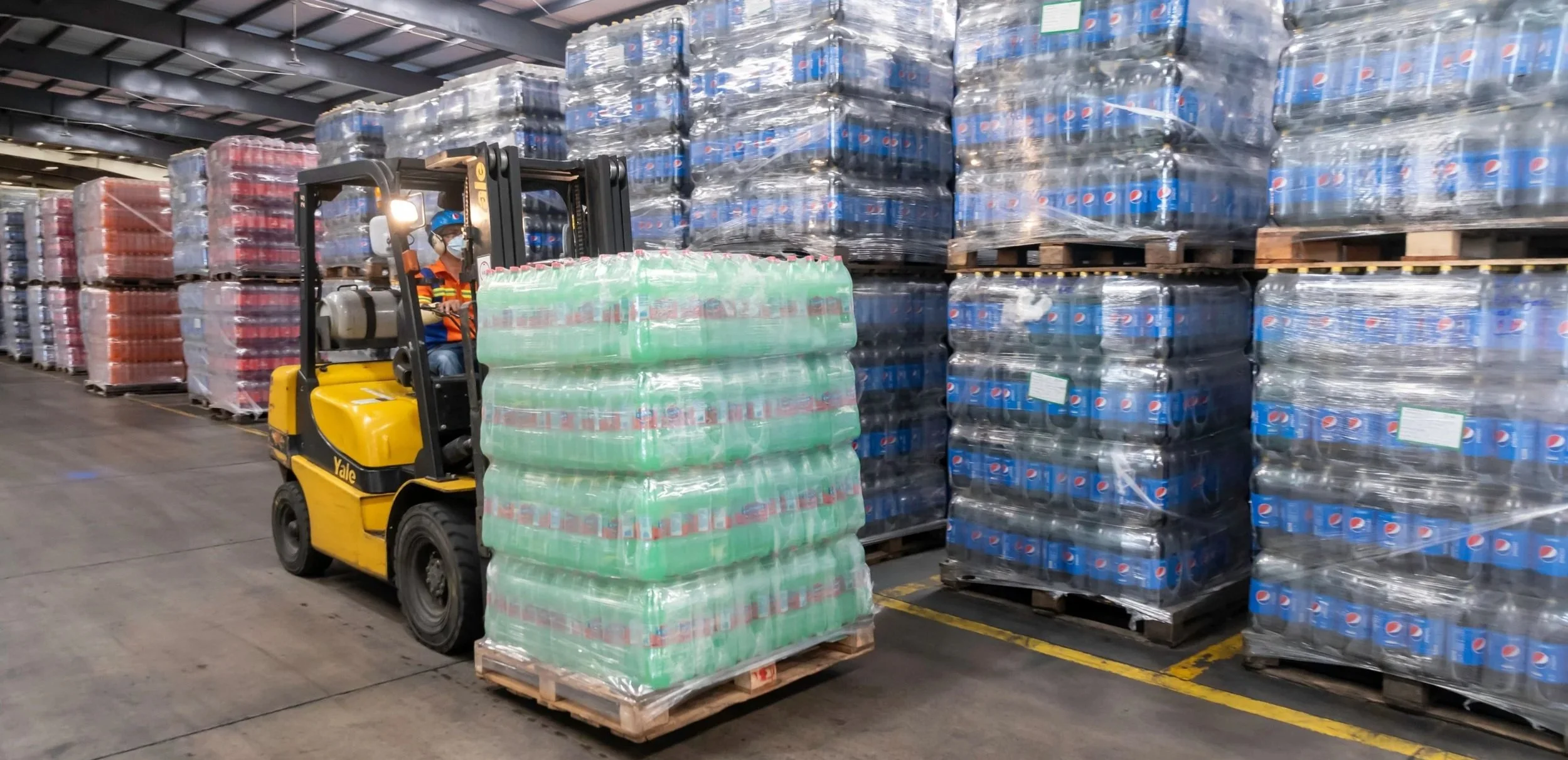
A pallet leaves your dock looking tight and tidy. Two days later, the receiving customer sends photos of a leaning stack, crushed corners, and cases on the trailer floor. Nobody on the line did anything obviously wrong, so what happened? In most cases the answer comes down to one number many plants never measure: stretch wrap containment force. Understanding containment force is the most reliable way to keep pallet loads intact from your floor to your customer's.
What Is Containment Force?
Containment force is the total squeezing pressure stretch film applies to hold a load together and to the pallet. Industry equipment makers describe it simply: multiply the wrap force (how tightly each layer of film is applied) by the number of film revolutions around the load. Two tight layers and four loose layers can produce similar results, which is why film thickness alone does not tell you whether a load is secure.
The catch is that containment force is rarely even. It should be checked at the top, middle, and bottom of the load. A pallet can be over-wrapped at the base and nearly bare at the top, which is exactly where loads tend to lean and shift once a truck starts braking and cornering.
How Much Containment Force Does Your Load Need?
The right target depends on load weight and stability. As a general starting point, packaging supplier IPS Packaging & Automation publishes these ranges:
• Light loads (0–500 lbs.): roughly 2–6 lbs. of containment force
• Stable mid-weight loads (500–1,100 lbs.): roughly 6–8 lbs.
• Heavy loads (1,100–1,700 lbs.): roughly 8–17 lbs.
• Very unstable heavy loads (1,700–2,200 lbs.): roughly 15–22 lbs.
Load shape matters too. Uniform, square loads that match the pallet footprint are the easiest to contain. Irregular loads with overhang, protruding corners, or mixed case sizes need more attention and often a higher-performance film that resists punctures. Your real target should ultimately come from your own shipping history: if loads arrive damaged, the number is too low; if boxes arrive crushed at the corners, it is too high.
Common Causes of Containment Failure
Most load failures trace back to a handful of repeatable mistakes:
• Uneven force from top to bottom, leaving one zone of the load under-secured.
• Poor film overlap between revolutions, creating weak bands where the load can separate.
• Not locking the load to the pallet. Film should wrap down onto the pallet at least a couple of inches so the load and pallet move as one unit.
• Forklift punctures. When film is wrapped all the way to the bottom of the pallet, forks pierce it and the film starts losing tension. Rolling the bottom few inches into a tight cable just below the top deck boards locks the load while clearing the forks.
• Loose film tails that snag on conveyors or equipment and unravel the wrap.
• Too much force, which crushes cases and wastes film.
Hand-wrapped pallets are especially vulnerable because every operator wraps differently. Without a written wrap standard, results vary shift to shift.
Measuring and Improving Containment Force
Containment force can be measured with an inexpensive handheld tool that pulls the film away from the load at a set distance and reads the force. Checking a few pallets per shift at the top, middle, and bottom gives you real data instead of guesswork. GenPac provides a free of charge stretch film containment assessment for anyone curious about their containment data.
Once you know your numbers, you can fine-tune your process. "Right-gauging" means using the correct film, gauge, overlap, and revolutions for a specific load, rather than defaulting to the thickest film on the shelf. Modern engineered and pre-stretched films can often deliver the same or better containment at a lower gauge, reducing film usage while keeping loads secure. For higher-volume operations, a semi-automatic stretch wrapper removes operator variation and applies consistent force on every load.
Frequently Asked Questions
What is stretch wrap containment force?
It is the total holding pressure stretch film applies to a pallet load, calculated as the wrap force of each layer multiplied by the number of film revolutions at a given point on the load.
Is thicker stretch film always stronger?
No. Today's engineered and pre-stretched films can provide equal or better containment at thinner gauges. How the film is applied matters as much as its thickness.
Where should I measure containment force on a pallet?
Measure at the top, middle, and bottom of the load. Force should be reasonably consistent across all three zones.
How do I keep the load attached to the pallet?
Wrap the film several inches down onto the pallet and, ideally, roll the bottom of the film into a tight cable just below the top deck boards so forklift forks do not puncture it.
Getting containment force right protects your product, your customer relationships, and your film budget. If you'd like help evaluating your current film, wrap pattern, or equipment, contact GenPac. Our team has supported manufacturers and food processors across the Southeast since 1982.